The Biggest Myths About Sharks Explained: Separating Fear from Science

Updated: Jul 7
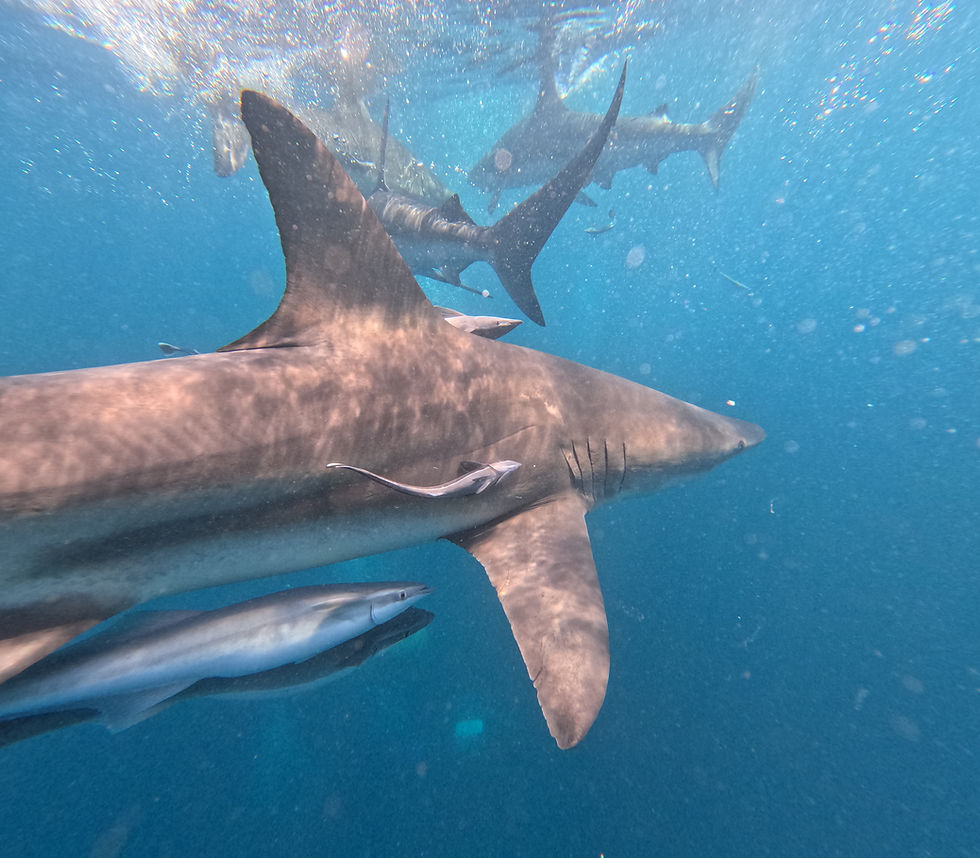
Are sharks really the dangerous predators we've always been told they are?
Quick Answer
No, not in the way popular culture often portrays them.
Although sharks are powerful predators, decades of scientific research show that attacks on humans are extremely rare. Most shark species pose little or no threat to people, and many are now threatened by human activities rather than the other way around. Understanding sharks through science rather than sensational headlines is essential for both marine conservation and safe, responsible tourism.
Why do sharks have such a frightening reputation?
For generations, sharks have been portrayed as ruthless killers in films, television and news reports. Events involving sharks receive intense media attention, while the millions of peaceful interactions between sharks and humans each year rarely make the headlines.
The release of Jaws in 1975 dramatically shaped public perception. Marine biologists have often referred to this phenomenon as the "Jaws Effect"—the lasting influence of fictional portrayals on how society views sharks.
In reality, sharks have existed for more than 400 million years, surviving multiple mass extinctions and evolving into over 500 recognised species, each occupying a unique ecological role.
Most of these species have never been involved in an attack on a human.
Myth 1: Sharks are constantly hunting humans
This is perhaps the most widespread misconception.
Humans are not a natural food source for sharks.
Research suggests that many bites occur because a shark mistakes a surfer or swimmer for a seal or other prey, particularly in low-visibility water. In many cases, sharks release the person immediately after the initial bite rather than continuing an attack.
Scientists studying shark behaviour have repeatedly found that sharks are curious animals. Like many predators, they investigate unfamiliar objects using their mouths because they do not have hands.
This curiosity can sometimes result in an exploratory bite but it is very different from active hunting.
Myth 2: All sharks are dangerous
There are currently more than 500 known shark species.
Only a very small number have been involved in serious incidents with humans.
Species such as:
Whale Sharks
Zebra Sharks
Nurse Sharks
Bamboo Sharks
Epaulette Sharks
are considered harmless to people when treated respectfully.
Even among larger species, behaviour varies considerably depending on habitat, season, food availability and individual temperament.
Lumping all sharks together would be like assuming every dog behaves like a wolf.
Myth 3: Sharks are mindless killing machines
Modern research paints a very different picture.
Scientists have documented:
Complex migration routes spanning thousands of kilometres.
Individual personalities.
Social behaviour in some species.
Problem-solving abilities.
Site fidelity, where sharks repeatedly return to the same locations year after year.
Satellite tagging projects have shown that many sharks follow remarkably consistent migration patterns linked to ocean temperatures, breeding grounds and food availability.
These behaviours suggest a far more sophisticated animal than the stereotype often portrayed.
Myth 4: Sharks are increasing in number
The opposite is true for many species.
According to the International Union for Conservation of Nature (IUCN), over one-third of shark and ray species are now threatened with extinction.
Major threats include:
Overfishing.
Bycatch.
Habitat destruction.
Illegal fin trade.
Climate change.
Because many shark species grow slowly and produce relatively few offspring, populations can take decades to recover.
Protecting sharks helps protect the health of entire marine ecosystems.
Why are sharks so important to healthy oceans?
Sharks are often described as apex predators, but their role extends beyond simply hunting other animals.
By influencing the behaviour and population sizes of prey species, sharks help maintain balance throughout marine food webs.
Healthy shark populations contribute to:
More resilient coral reefs.
Balanced fish populations.
Healthier seagrass meadows.
Greater biodiversity.
When sharks disappear, the effects can cascade through entire ecosystems.
What do scientists still not know?
Despite decades of research, sharks continue to surprise researchers.
Current areas of study include:
How some species navigate vast ocean distances with remarkable accuracy.
The role of Earth's magnetic field in shark navigation.
The full migration routes of deep-ocean species.
Social interactions between individuals.
How climate change will alter future distributions.
Every year, new technologies—including satellite tracking, underwater drones and environmental DNA (eDNA)—reveal behaviours that were previously impossible to observe.
Sharks remain one of the ocean's most fascinating subjects of ongoing research.
Where can travellers experience sharks responsibly?
For those hoping to see sharks in the wild, responsible tourism offers incredible opportunities while supporting conservation and local communities.
Some of the world's best destinations include:
Mexico
Swim alongside gentle Whale Sharks during seasonal migrations.
Philippines
Observe Whale Sharks and learn about community-based conservation initiatives.
Bahamas
Encounter Caribbean reef sharks and tiger sharks with experienced operators.
South Africa
One of the world's leading destinations for shark research, conservation and responsible viewing.
French Polynesia
See grey reef sharks and blacktip reef sharks in crystal-clear waters.
When choosing an operator, look for businesses that follow local regulations, avoid feeding wildlife where inappropriate and prioritise animal welfare over close encounters. For example Big Blue Snorkel vets their snorkeling companies very carefully.
How POV Travel approaches shark expeditions
At POV Travel, we believe that understanding sharks is more rewarding than fearing them.
Our marine expeditions are designed around education, ethical wildlife encounters and respect for the natural environment. Rather than presenting sharks as adrenaline attractions, we aim to help travellers understand their ecological importance, the conservation challenges they face and the remarkable adaptations that have allowed them to thrive for hundreds of millions of years.
Whether you're joining one of our future shark-focused expeditions or simply exploring our educational resources, we hope you'll leave with a new perspective on one of the ocean's most misunderstood animals.
Frequently Asked Questions
Are sharks more dangerous than crocodiles?
Globally, fatal shark attacks are far less common than many other animal-related incidents, including crocodile attacks in regions where both occur.
What's the safest shark to swim with?
Whale Sharks are widely regarded as one of the safest shark species to observe in the wild when encounters are managed responsibly.
Why don't sharks attack scuba divers more often?
Divers usually appear unfamiliar as prey, and many shark species are naturally cautious around people underwater.
Can sharks recognise humans?
Current research suggests sharks can distinguish shapes, movement and behaviour, but whether they recognise individual humans in the same way mammals do remains an area of ongoing study.
See it for yourself, in the water
You can read the science, or you can feel your heart rate settle as a mako slows to inspect you off Cabo San Lucas and then vanishes into the blue. These are not cage dives or baited spectacles. They are genuine encounters, in small groups, in wild water shared with the animals that have ruled the ocean for hundreds of millions of years. It changes how you see them for good.
Explore the expeditions: Swim With Sharks & Marine Life →
Further Reading
International Union for Conservation of Nature (IUCN) Shark Specialist Group.
Florida Museum International Shark Attack File.
NOAA Fisheries – Shark Conservation.
The Biology of Sharks and Rays by A. Peter Klimley.
Sharks of the World by Leonard Compagno.
Continue Exploring
If this article sparked your curiosity, you may also enjoy: